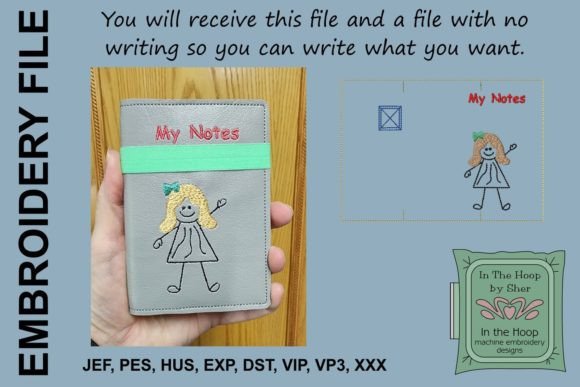
Girl Mini Compostion Notebook Cover
Setting up for a weekend craft fair is equal parts excitement and logistical chess. I spend hours arranging my booth, balancing visual weight, and ensuring that every item on the table tells a cohesive story. As an embroidery designer who has turned countless digital files into tangible craft fair products, I know that success often comes down to two things: how well the design translates to fabric and whether it catches the eye of a passerby in under three seconds.
Recently, I evaluated a design titled Girl Mini Compostion Notebook Cover. On paper, it sounds like a niche novelty item. However, when you look at the practical application for handmade markets, this embroidery file presents some interesting opportunities for boutique makers and Etsy sellers. Below is my professional review of how this design performs in the real world, from production to point-of-sale.
First Impressions and Visual Appeal
The title suggests a nostalgic, perhaps academic or artistic theme. For a handmade product intended for a market, the aesthetic needs to be instantly recognizable. Based on the description, this design fits the specific dimensions of mini composition books (3.25 x 4.5 inches). This implies a compact, contained graphic rather than an expansive landscape piece.
In terms of mood, this feels like a modern rustic or soft minimal design. It likely appeals to students, artists, journalers, and teachers. The "notebook" motif is universally understood, which reduces the cognitive load for a customer deciding whether to buy. It doesn’t require explanation; it just looks cute. This clarity is crucial for small shop products where customers are making quick impulse decisions.
Product Application and Versatility
Where does this machine embroidery design shine? Because of its small scale, it is not suited for large focal points on full-size aprons or oversized tote bags unless used as a repeated pattern. Instead, it excels as an accent piece or a standalone item.
- Fabric Pouches and Pencil Cases: This is the most logical application. A mini notebook cover design embroidered onto a matching fabric pouch creates a perfect gift set. These are high-margin items that photograph beautifully for online listings.
- Tea Towel Embroidery: While a tea towel is larger, placing this design in the corner adds a charming, functional detail. It works well for kitchen decor that appeals to young adults or college students.
- Embroidered Patch: You can produce these as iron-on or sew-on patches. Patches are incredibly popular at craft fairs because they are low-cost entry points for buyers. A patch featuring this design can be attached to backpacks, water bottles, or denim jackets.
- Caps and Beanies: If the stitch density allows, centering this on the front of a baseball cap or the cuff of a beanie creates a trendy, streetwear-inspired accessory.
However, consider the category tags. The product is listed under "Boys," yet the title says "Girl." This discrepancy is a red flag for quality control. As a designer, I would verify if the design features masculine or feminine motifs. If it is truly gender-neutral (e.g., a simple sketch of a book), it sells better to everyone. If it is heavily gendered, ensure your marketing matches the actual design content to avoid returns.
Production Practicality
When evaluating any digital embroidery file for batch production, I look at the technical constraints. The description mentions "multiple embroidery file formats," which is excellent news. It means compatibility with various machines, reducing friction for other designers who might want to sell finished goods using this asset.
But format versatility does not guarantee ease of stitching. Here are the critical factors to test before committing to a run:
- Stitch Density: Check the stitch density closely. If the design includes tiny text or fine lines within the notebook illustration, it may pucker thin fabrics. For a tote bag design or apron embroidery, you need enough stability to prevent distortion.
- Hoop Size: Confirm the required hoop size. Since it fits a 3.25 x 4.5 inch area, it likely requires a small hoop (4x4 or 5x7). Small hoops limit your fabric choices. You cannot embroider this on a wide canvas without multiple hooping attempts, which increases labor time.
- Thread Colors: Review the recommended thread colors. Designs with too many color changes slow down production. For a high-volume craft fair booth, simplicity wins. Fewer spool changes mean more units produced per hour.
Photography and Online Marketing
For Etsy sellers and those selling via social media, visual appeal is everything. This design lends itself well to flat-lay photography. Imagine the embroidered notebook cover next to real stationery: pens, stickers, and a coffee cup. The composition is naturally "Instagrammable."
Create a printable mockup to visualize how the design looks on different backgrounds. Does it pop against white muslin? Does it stand out on navy blue denim? Testing these combinations helps you choose the right base materials for your finished product.
Use the term design assets in your backend metadata if you are selling the digital file itself. If you are selling the physical item, focus on keywords like "student gift," "teacher appreciation," and "back to school embroidery."
Careful-Use Notes and Quality Control
To maintain brand consistency and customer trust, follow these strict guidelines during production:
- Test on Scrap Fabric: Never jump straight into your final material. Test on scrap fabric that mimics the texture of your target product. Fabric texture affects how stitches sit; looped towels may hide details, while smooth cotton shows them clearly.
- Check Thread Contrast: Ensure there is sufficient contrast between the thread and the fabric. Low-contrast designs look muddy in person, even if they look good on a screen.
- Inspect Stitch Clarity: Zoom in on the digital file. Are there any overlapping stitches that might cause thread breaks? Are the lettering or small details clear? If the design loses clarity at smaller sizes, do not attempt to shrink it further.
- Use the Right Stabilizer: Proper stabilization is non-negotiable. Use cut-away stabilizer for stretchy fabrics like caps or fleece, and tear-away for stable wovens. Poor stabilization leads to puckering, which ruins the commercial embroidery quality.
Final Verdict for Craft Fair Sellers
The Girl Mini Compostion Notebook Cover design is a strong candidate for niche markets, particularly among students, educators, and stationery lovers. Its strength lies in its specificity and charm. It is not a generic logo; it is a thematic element that resonates with a specific lifestyle.
For maximum sales potential, pair this design with complementary products. Sell the embroidered pouch alongside a pen set. Offer it as a custom add-on for teacher gifts. Ensure you have verified the gender alignment and checked the technical specs (hoop size, density, formats) before mass production.
If executed with care—using high-quality threads, proper stabilizers, and sharp attention to detail—this design can become a standout item in your booth display. It offers a sense of handmade quality and personal touch that mass-produced items simply cannot replicate. For the savvy creative entrepreneur, it is a small design with big potential.