Baby Bib Review for Small Business Merch
As an experienced embroidery designer who has spent years refining designs for commercial applications, I approach every new digital file with a critical eye. When evaluating the Baby Bib outline embroidery design, my focus shifts immediately from simple decoration to business viability. This review is not just about whether the stitches look pretty; it is about how this specific design functions as a core asset for small business merchandise, branded patches, and custom apparel lines.
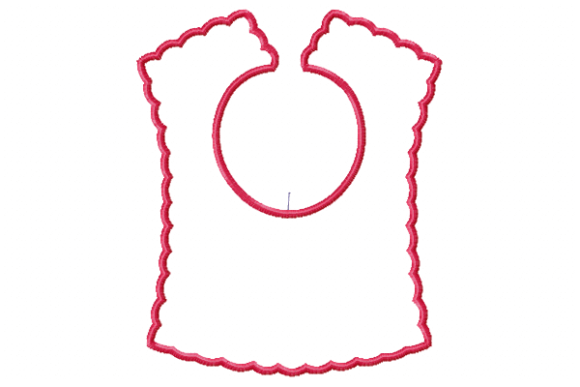
The product description highlights that this is an "ITH baby bib outline embroidery design" and a "perfect template for creating adorable and personalized bibs in-the-hoop." While these features are excellent for direct-to-garment production, they raise immediate questions about versatility. Can an outline design intended for a specific garment shape translate effectively into a standalone patch? Does it possess the structural integrity required for high-frequency washing on aprons or caps? Let us dive deep into how Baby Bib performs when applied to real-world commercial scenarios.
First Impressions: Personality and Brand Alignment
Upon reviewing the visual concept of Baby Bib, the first impression is one of warmth and approachability. The description mentions "crafted with love" and "adding a touch of charm," which suggests a design aesthetic that leans towards handmade, playful, and friendly rather than rigidly corporate or minimalist. For a brand identity focused on artisanal quality, such as a boutique bakery, a local florist, or a creative studio, this personality is a significant asset.
However, for businesses seeking a sleek, modern, or luxury feel, this design might feel too decorative. The term "outline" implies that the design relies heavily on clean lines and negative space. In a commercial context, this can be a double-edged sword. It offers a light, airy look that works beautifully on light fabrics like cotton tote bags or white aprons, but it may lack the visual weight needed for dark uniforms or high-contrast branding where bold fills are often preferred. The design feels professional yet distinctly personal, making it ideal for customer gifts, event merch, and Etsy branding where a human touch drives sales.
Real-World Business Applications
The true test of any machine embroidery design is its adaptability across various mediums. While the primary function of Baby Bib is clearly defined as a template for in-the-hoop baby products, a savvy entrepreneur sees potential far beyond the nursery. Here is how this design asset could integrate into a broader small business merch strategy:
- Embroidered Patches: If the outline structure is robust, this design could serve as a unique logo for staff uniforms. A well-executed embroidered patch featuring this motif would work exceptionally well on denim jackets, canvas backpacks, or service caps.
- Apron Embroidery: For bakeries, coffee shops, or craft studios, placing this design on the chest of a white chef's apron adds a charming, welcoming detail. It signals to customers that care and attention go into the finished product.
- Tote Bag Design: As a subtle mark on the side or bottom corner of a canvas tote bag, the outline style prevents the design from overwhelming the fabric texture. It serves as a sophisticated brand identifier without looking like a mass-produced advertisement.
- Cap Embroidery: The curved nature of a cap front requires careful consideration. If the design is compact enough, it can act as a focal point, though the curvature may distort fine details if the stitch density is too high.
- Product Packaging Accents: Imagine this design stitched onto a tag attached to a handmade soap bar or a jar of honey. It elevates the perceived value of the item and reinforces the handmade product narrative.
In these scenarios, Baby Bib transitions from a simple garment embellishment to a versatile design asset that enhances brand recognition. It creates a consistent visual language that connects disparate products under one umbrella.
Critical Considerations and Limitations
Despite its charm, there are specific areas where Baby Bib requires caution during production. As a designer, I must advise against using this outline design in situations where durability and clarity are paramount.
First, consider small patch sizes. Outline designs rely on line width to define shapes. If digitized too small, the lines may merge, causing the design to lose definition entirely. Similarly, on curved surfaces like the front of a baseball cap, tight outlines can stretch or pucker, leading to a distorted appearance. If the design includes tiny lettering or intricate details within the outline, these will likely disappear on smaller items.
Another major concern is stitch density. If the design attempts to fill large areas with satin stitches, it may become too stiff for flexible fabrics like t-shirts or soft caps. Conversely, if it is purely an outline with low density, it might not hold up well after frequent washing, especially on work shirts or aprons that undergo industrial laundering. Dark uniforms present another challenge; without sufficient fill or contrasting thread colors, a thin outline might vanish against a black or navy background.
Impact on Brand Identity and Customer Trust
Every stitch tells a story about your business. Using a well-chosen design like Baby Bib can significantly influence brand identity and customer trust. When a customer sees a cohesive, professionally executed design on a tote bag or a staff uniform, it signals professionalism and attention to detail. It suggests that the business values quality in both its services and its merchandise.
For handmade brands, the "crafted with love" aspect of this design resonates deeply. It fosters an emotional connection with buyers, enhancing buyer engagement and encouraging repeat purchases. However, consistency is key. If the thread colors vary wildly between batches or if the hoop size results in uneven placement, the perception of professionalism drops. The design must remain visually consistent across all finished products to maintain its value.
Practical Designer Notes for Production
Before committing to a full production run, I strongly recommend following a rigorous testing protocol. Do not assume the digital file will perform perfectly on your specific equipment or materials.
- Test in Black and White: Run a test stitch-out in a single color to check the basic structure and spacing. Ensure the outline does not break up or crowd itself.
- Check Small Patch Size: Create a mockup at the intended final size (e.g., 2 inches) to verify legibility. If it looks muddy at this scale, it will fail as a patch.
- Review Thread Color Contrast: Select threads that provide high contrast against your target fabric. Avoid similar shades unless you are aiming for a tonal, subtle effect.
- Inspect Spacing and Hoop Size: Confirm that the design fits within your standard hoop dimensions without requiring excessive trimming or re-hooping.
- Test on Real Fabric: Stitch the design on the actual material you intend to use. Fabric texture can drastically alter the final look; what works on stable cotton may fail on loose-weave linen.
- Use Proper Stabilizer: The choice of stabilizer is critical for maintaining the integrity of the outline. Use a tear-away or cut-away stabilizer appropriate for the fabric weight to prevent puckering.
- Create a Printable Mockup: Before sending files to a client or launching a product, generate a printable mockup to visualize the design in context. This helps in client approval and marketing planning.
- Compare Against Other Assets: Place this design beside your other digital embroidery files to ensure it matches the overall aesthetic of your brand collection.
- Confirm Commercial Licensing: Most importantly, verify the licensing terms. Ensure you have the right to use this embroidery file for commercial embroidery projects, including selling the finished goods.
By treating the Baby Bib design with this level of scrutiny, small business owners can transform a simple outline into a powerful tool for growth. Whether used on a custom apron, a promotional cap, or a branded product label, the success of the project depends on understanding the technical limitations and leveraging the design's inherent charm. With proper execution, this design can elevate your custom apparel and help your brand stand out in a crowded marketplace.